culture
Why Durga Puja in Kolkata Carries a UNESCO Heritage Listing
The ten-day festival was inscribed on UNESCO's Representative List of the Intangible Cultural Heritage of Humanity in 2021.
Listen in English · 2 min
How we reported this
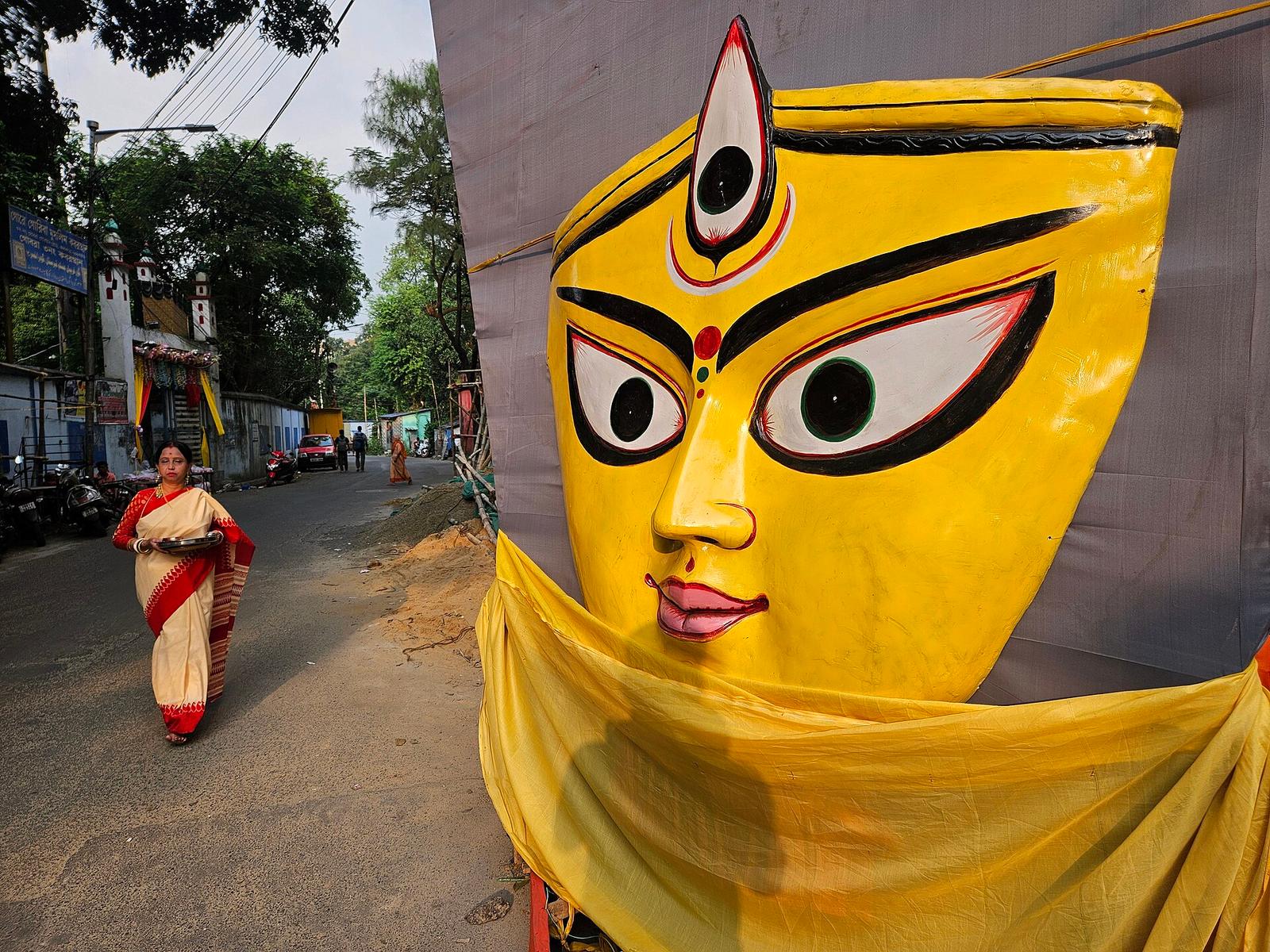
Durga Puja in Kolkata was inscribed on UNESCO's Representative List of the Intangible Cultural Heritage of Humanity in 2021, a recognition that placed the city's best-known festival alongside cultural practices from around the world. For a visitor trying to understand what the celebration involves, the UNESCO description is a useful starting point.
The festival is held annually in September or October and marks the ten-day worship of the Hindu mother-goddess Durga. It is celebrated most prominently in Kolkata, in the state of West Bengal, and also across other parts of India and among the Bengali diaspora abroad.
How the celebration unfolds
In the months before the festival, small artisanal workshops sculpt images of Durga and her family from unfired clay drawn from the Ganga river. The worship begins on the day of Mahalaya, when eyes are painted onto the clay images in a ritual that is understood to bring the goddess to life. It concludes on the tenth day, when the images are immersed in the river from which the clay was taken, giving the festival its association with home-coming and a return to one's roots.
Art, scale and the public street
UNESCO characterises Durga Puja as one of the strongest examples of the public performance of religion and art, and as a working ground for collaborating artists and designers. The festival is defined by large-scale installations and pavilions, known as pandals, built across urban neighbourhoods, along with traditional Bengali drumming and the veneration of the goddess.
During the event, crowds move from pandal to pandal to admire the installations, and the UNESCO citation notes that divisions of class, religion and ethnicity tend to dissolve in the shared public space. Visitors planning to experience the festival should expect large pedestrian crowds across the city during the main days, and should plan travel around the immersion processions that close the celebration.