culture
Dakshineswar Kali Temple: History on the Banks of the Hooghly
Built in 1855 by Rani Rashmoni, the riverside temple is closely tied to the life of Sri Ramakrishna.
Listen in English · 2 min
How we reported this
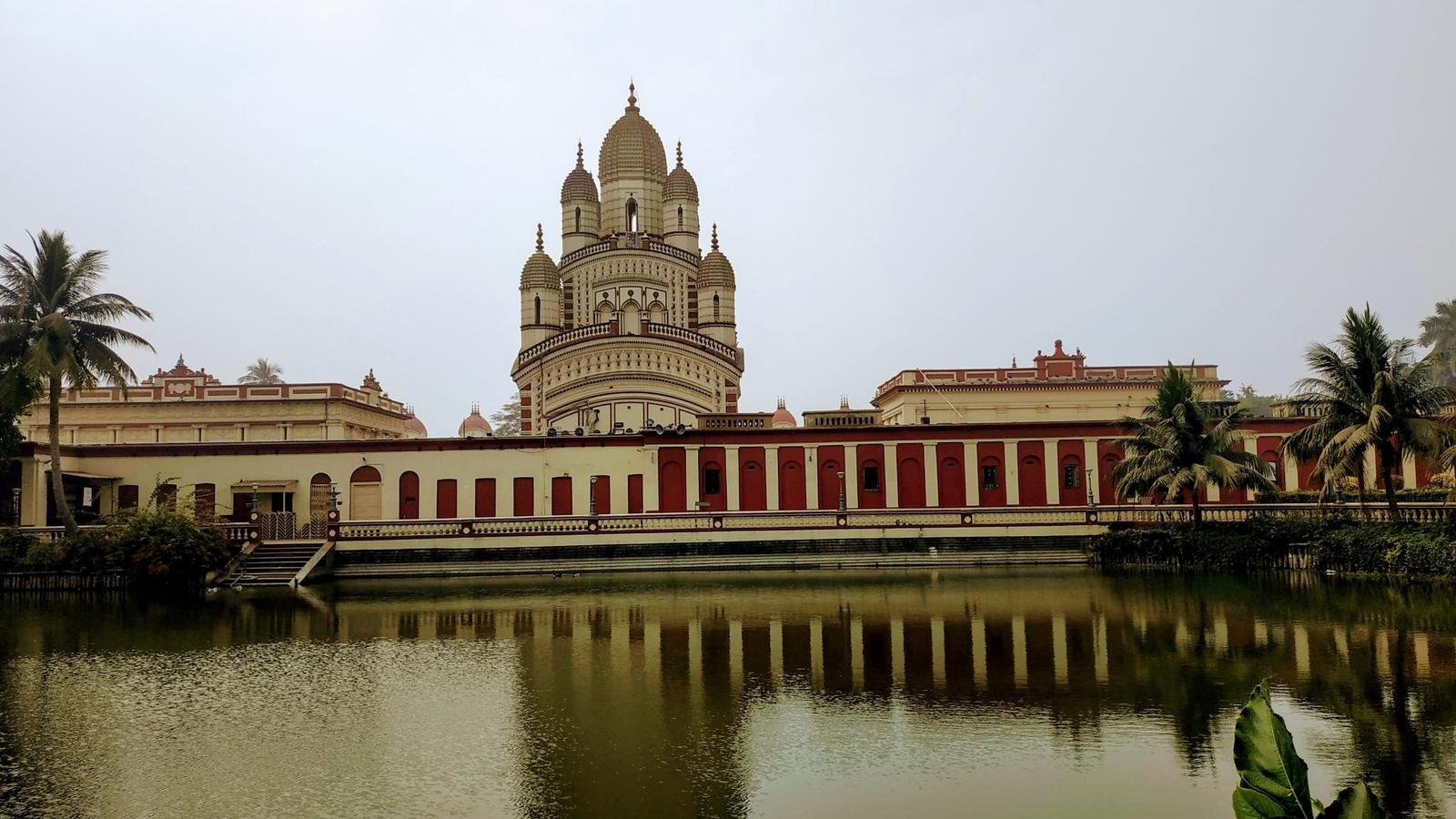
On the eastern bank of the Hooghly river, north of central Kolkata, the Dakshineswar Kali Temple is among the most visited religious sites in the region. Built in a navaratna, or nine-spired, style, its presiding deity is Bhavatarini, a form of the goddess Kali.
Rani Rashmoni's temple
The temple was built in 1855 by Rani Rashmoni, a landholder and philanthropist and a devotee of Kali. Traditional accounts record that she undertook the project after a vision, and that she acquired a large plot at Dakshineswar to build the temple complex.
The compound is more than a single shrine. Around the nine-spired main temple, which stands on a raised platform, lies a large courtyard, and along the riverfront stand twelve identical shrines dedicated to Shiva, together with a temple to Radha and Krishna and a bathing ghat on the river.
The Ramakrishna connection
The temple is closely associated with the nineteenth-century mystic Sri Ramakrishna, who served as a priest there, and with his wife Sarada Devi. According to the Ramakrishna Math's account, Ramakrishna was appointed priest of the Kali temple after the death of his brother, and his years of intense devotion at Dakshineswar became central to his spiritual life. His room, in the northwest corner of the courtyard, remains part of what visitors come to see.
Planning a visit
The temple sits north of the city and is now served by the Dakshineswar station at the northern end of the metro's north-south corridor, which has made access easier for day visitors. The temple draws large numbers of pilgrims and visitors, especially at weekends and on festival days. Those visiting should dress modestly, expect queues during busy periods, and follow the temple's rules on photography and footwear within the compound.